What can I do at home? Post-op restrictions
Choose your surgery type for guidance on movement, daily tasks and restrictions at home.
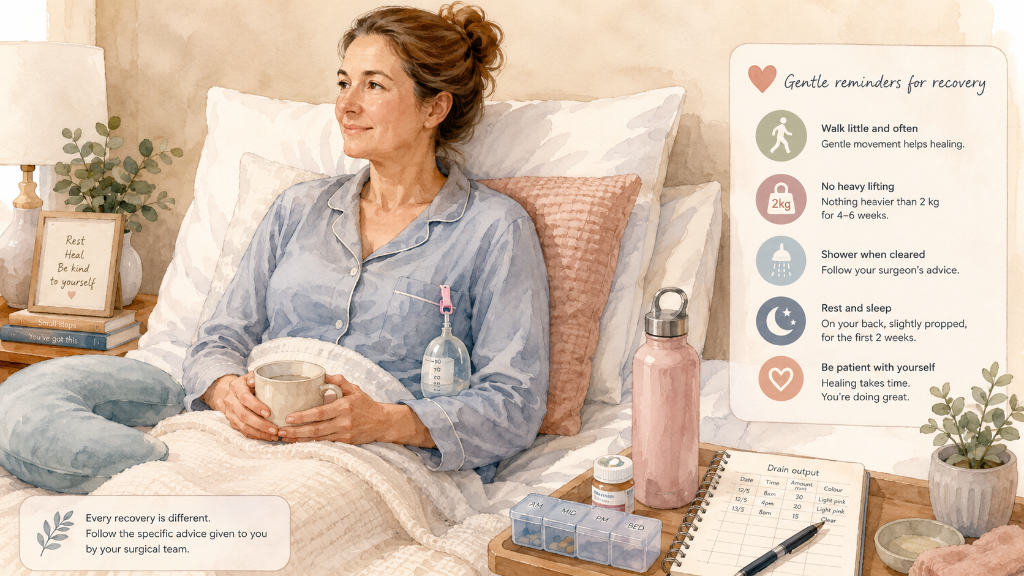
Pick your surgery type above to see your restrictions.
If you had more than one operation, choose the option that combines them.
Call your surgical team or go to ED if any of these happen
Contact your team promptly. For severe breathing difficulty, chest pain or collapse, call 000.
- Fever over 38°C
- Sudden increase in pain that pain relief is not controlling
- Wound becoming red, hot, smelly, or leaking pus
- Sudden swelling, hardness, or colour change in a flap
- Calf pain, swelling, or shortness of breath (possible blood clot)
- Drain output that suddenly increases or changes colour to bright red
Questions to ask your team before discharge
- What is the heaviest thing I can lift, and for how long?
- When can I drive? (and will my car insurance be valid)
- When can I shower, and how should I dry the wound?
- When can I return to gentle exercise / walking / swimming / gym?
- When can I sleep on my side or front?
- What movements should I specifically avoid, and for how long?
- Who do I call if something doesn't feel right — after hours?
- When is my follow-up appointment, and what should I bring?
Tools that go alongside this
A guide only. Recovery is highly individual. Always follow the specific written and verbal instructions given by your own surgical team — their advice overrides anything on this page. Sources: BCNA recovery resources, Cancer Australia, McGrath Foundation, Royal Australasian College of Surgeons patient information.